
Regulators Become Innovators
How Public Agencies Are Now Driving the Next Wave of Health-AI Adoption

Last week, we explored healthcare's cautious dance with AI — clinicians adopting tools to ease burnout yet still wary about issues of trust and oversight. This week, however, regulators have unexpectedly stepped forward. Traditionally cautious gatekeepers, these public watchdogs have rapidly transformed into proactive AI pioneers. The FDA is swiftly integrating generative AI into drug reviews, while European agencies have unveiled ambitious AI regulatory roadmaps. Regulators are no longer just policing AI; they're actively designing its future trajectory.
This shift means potentially faster drug approvals, deeper safety insights, and increased complexity as public agencies face unprecedented technological stakes. One undeniable truth emerges: the healthcare AI landscape is no longer just Silicon Valley’s realm — it’s being reshaped within government offices as well.
Release Notes
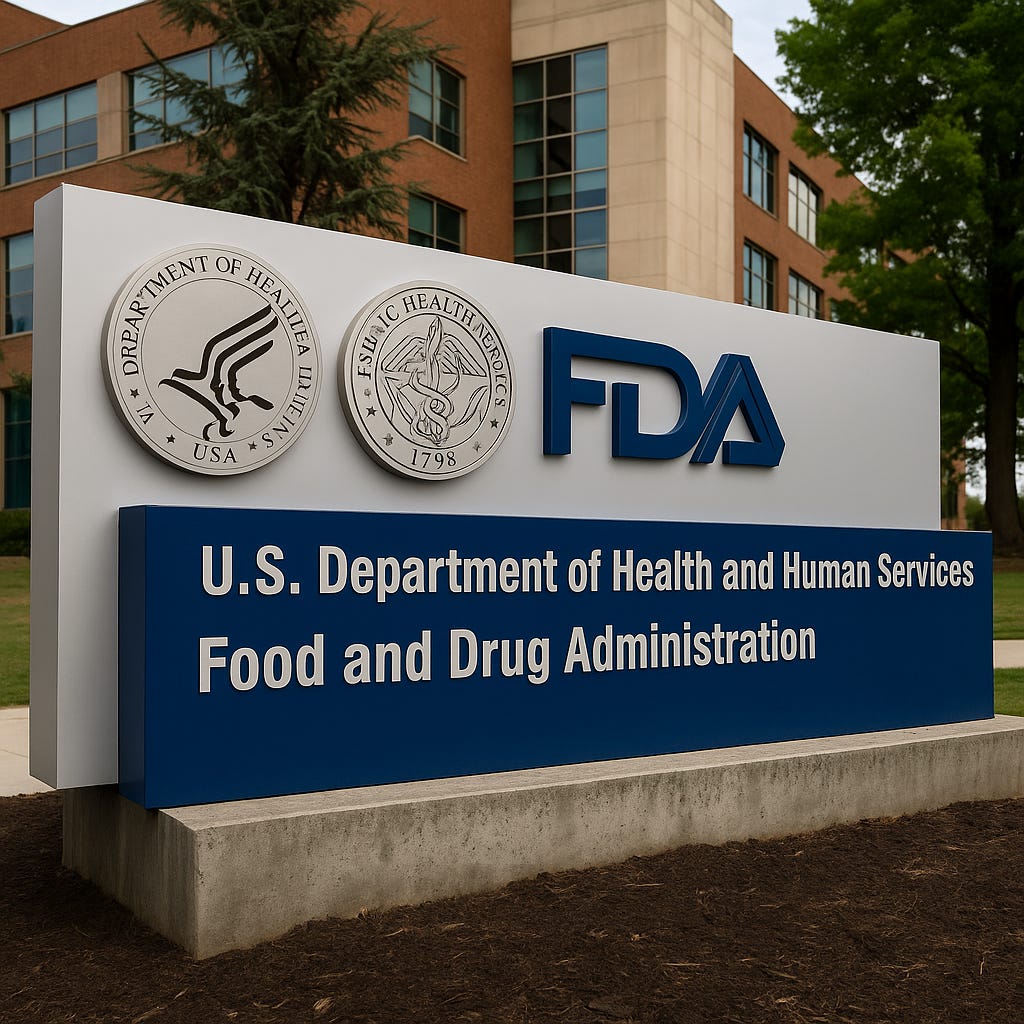
FDA Goes All-In on AI for Drug Reviews
Following a successful trial, the U.S. FDA is rapidly integrating generative AI across its drug review processes. Commissioner Dr. Martin Makary noted FDA scientists were "blown away" by the pilot system's effectiveness in reducing tedious administrative tasks. [PharmExec, 8 May 2025]
Now, the agency aims for full deployment by June 30, mandating the new GenAI platform to assist reviewers with document summarization and cross-referencing, freeing them for critical scientific analysis. To spearhead this shift, the FDA has also appointed its inaugural Chief AI Officer.
Why it matters: Faster reviews could get treatments to patients sooner. By freeing staff from paperwork, the FDA hopes AI will speed up approvals without sacrificing rigor, marking a milestone in regulatory innovation. [Reuters, 9 May 2025]
Europe Unveils Data & AI Medicines Regulation Roadmap
European regulators are similarly ambitious, releasing a joint “Data and AI in Medicines Regulation to 2028” roadmap aimed at leveraging vast health datasets and AI for drug evaluations. Emphasizing stringent data security and ethical standards, EMA’s data analytics head, Peter Arlett, underscored the importance of strategic alignment to translate AI-powered insights into measurable public health outcomes. This roadmap links closely with upcoming EU legislation, such as the European Health Data Space and the AI Act, positioning regulatory bodies to effectively harness an approaching “explosion of data” and expedite evidence-backed decisions.
Why it matters: Europe is proactively modernizing its oversight. By investing in AI capabilities and data governance now, EU agencies aim to speed up approvals of effective medicines and not get drowned by big data. It’s a signal to industry that the future of regulation will be data-driven. [PDA, 9 May 2025]

NHS Trains AI on 57 Million Health Records
UK researchers have launched “Foresight,” a generative AI trained on de-identified NHS health records from 57 million individuals — an unprecedented scale for medical AI training. Operating exclusively within a secure NHS environment, Foresight aims to predict patient outcomes like hospitalizations and new diagnoses by analyzing historical data patterns. Initially focused on COVID-19 outcomes, successful deployment could broaden to early identification of at-risk patients and better healthcare resource allocation. By leveraging comprehensive national data, Foresight aims to detect patterns across diverse demographics, including rare conditions typically elusive in smaller datasets.
Why it matters: Training AI on an entire country’s health data is unprecedented and a bit provocative. It could usher in an era of ultra-broad predictive models that catch health issues sooner and tailor interventions to population needs. But it also raises big questions about privacy and governance. All eyes will be on whether NHS Foresight can deliver life-saving predictions while keeping patient trust intact. [Nature, 6 May 2025]
GE’s AI-Powered Scanner Cleared by FDA
The FDA has approved a new GE HealthCare imaging system integrating AI into nuclear medicine diagnostics. The Aurora SPECT/CT scanner, paired with the Clarify DL deep learning software, enhances image quality by removing noise and sharpening details without additional scanning time. With its wider bore and larger detection field, Aurora significantly expands scanning coverage. Cleveland’s University Hospitals, which previously tested GE’s AI solutions in X-ray triage, will introduce the Aurora scanner first in the U.S. Its approval marks another major step by regulators to actively encourage AI-enhanced diagnostics, potentially accelerating patient diagnosis and treatment outcomes.
Why it matters: This marks another FDA nod for AI in medical devices. Better image quality can mean earlier and more accurate diagnoses (think clearer cardiac scans or cancer detection). It’s also a sign that AI is steadily permeating frontline clinical tools like scanners, not just back-office software. As hospitals install these AI-enhanced machines, radiologists could get clearer pictures faster, hopefully leading to better patient outcomes. [Fierce Biotech, 7 May 2025]

AI “Co-Pilots” Ease Value-Based Care Burdens
An emerging report highlights AI’s potential in reducing primary care burdens under value-based care models. A study involving 120 physicians demonstrated that an AI “co-pilot” (developed by Navina) lowered clinical review time by 40% for complex patient visits and reduced physician burnout by 32%. The AI effectively summarized patient histories, proposed diagnoses, and identified care gaps — tasks typically heavy with paperwork. Physicians using the tool reported higher documentation accuracy and improved patient risk scoring. Over 90% trusted AI recommendations, although the study acknowledged the absence of a control group as a limitation.
Why it matters: Value-based care comes with a heavy documentation and reporting load, which often frustrates doctors. Early evidence that AI helpers can lighten that load – saving time and reducing burnout – is promising. It hints that AI could be “essential for thriving” under new payment models, as long as accuracy and trust remain high. [Fierce Healthcare, 9 May 2025]
Hospital Accreditor Taps Palantir for AI Insights
The Joint Commission, accrediting roughly 80% of U.S. hospitals, has partnered strategically with Palantir Technologies to digitally transform hospital oversight. Palantir’s AI platform will analyze vast datasets from hospital surveys and incident reports, identifying hidden links between healthcare practices and patient safety outcomes. By enabling real-time benchmarking and pinpointing areas needing improvement, this collaboration aims to modernize hospital compliance processes significantly. However, widespread adoption raises critical questions about data privacy and secure usage — a challenge regulators must skillfully navigate to maintain patient trust.
Why it matters: If hospital accreditation sounds boring, consider that it directly impacts patient safety. By leveraging AI on a nationwide scale, The Joint Commission could spot systemic problems (or successes) faster and share that intel with hospitals. Think of it as an early warning system for quality issues. However, it also raises the stakes on data privacy and the need to ensure algorithmic fairness in judging hospitals. [The Joint Commission, 8 May 2025]

New AI Model to Simulate Clinical Trials
QuantHealth introduced its Large Real-World Drug Model (LRDM) — an AI built on extensive patient data — that virtually simulates clinical trials before they're physically conducted. By predicting patient responses, the technology allows faster identification of ineffective drug scenarios and optimization of patient selection and clinical endpoints. Rapid early testing suggests the LRDM could significantly reduce costly trial failures. Regulators may soon need to evaluate how to validate and integrate these simulated trial models to ensure patient safety and clinical effectiveness.
Why it matters: Drug development is notoriously costly and inefficient. An AI that can tell researchers “this trial is likely to fail” or “try this patient subgroup instead” could save years and millions of dollars. It essentially lets scientists A/B test a clinical trial in silico. While it won’t replace real trials (yet), it might make them smarter and faster. As regulators begin to accept more model-driven evidence, such AI could become a standard part of bringing new therapies to market. [HIT Consultant, 9 May 2025]
Big Tech Alliance to “Make Biology Programmable”
AWS has partnered with Latent Labs, founded by former DeepMind AlphaFold researchers, to widely streamline access to advanced generative AI tools in life sciences. This partnership aims to democratize sophisticated AI techniques, enabling broad use in drug discovery, protein engineering, and precision medicine. As such, powerful AI platforms become broadly accessible to biologists and pharma researchers globally, regulators may soon face new challenges in establishing oversight frameworks that balance AI innovation with ethical and safety considerations.
Why it matters: This is another sign that cloud giants see pharma as the next frontier for AI. By making advanced models accessible (and affordable) via the cloud, innovations like AI-driven drug discovery won’t be limited to just a few tech-savvy companies. We could see an acceleration in how drugs and therapies are discovered, from designing novel proteins to formulating precision treatments. It also underscores the trend of cross-disciplinary partnerships: AI experts teaming with life scientists, facilitated by cloud platforms, to push the envelope of what’s possible in healthcare R&D. [Latent Labs, 6 May 2025]
EU’s AI Act Faces Enforcement Hurdles
Europe faces significant challenges enforcing its ambitious AI Act, as highlighted by EU advisor Kai Zenner. Many member states currently lack the budget and expertise required for effective supervision, a situation that risks inadequate compliance and oversight. By August, EU countries must establish enforcement standards, yet persistent financial constraints and tech talent shortages threaten regulatory effectiveness. Without innovative solutions — increased cross-border cooperation or enhanced training programs — there's a risk that AI regulations could become ineffective, potentially leaving citizens vulnerable to unregulated AI systems.
Why it matters: Europe’s AI Act is the world’s most ambitious attempt to regulate AI, covering everything from medical algorithms to hiring tools. If enforcement falters, it could undermine the law’s credibility and leave patients and consumers unprotected from AI-related harms. It also highlights a broader issue: governments everywhere will need more tech expertise (and funding) to keep up with the private sector’s AI advances. The coming months will test whether the EU can turn lofty AI principles into actual practice. [PYMNTS, 12 May 2025]
Stats of the Week
“66% of physicians now use AI clinically—up sharply from just 38% last year, underscoring rapid adoption and growing trust.” – medicaleconomics.com
“Doctors saved 15,700 hours (about 1,800 workdays) in documentation time thanks to ambient AI scribes across 2.5 million patient visits.” – healthcarehuddle.com
“Primary care physicians reduced chart review time by 40% and burnout by 32% after one month of using an AI assistant, showing AI's potential for clinical efficiency.” – fiercehealthcare.com
Questions to Ponder
Would you consent to sharing your anonymized health data for training predictive AI models if it meant earlier detection of serious illnesses, or would privacy concerns hold you back?
What tedious healthcare task would you most like delegated to AI — and conversely, what healthcare decisions or tasks would you absolutely never entrust to artificial intelligence?
How can regulators best balance encouraging swift AI innovations with thorough oversight to ensure patient safety and effectiveness?